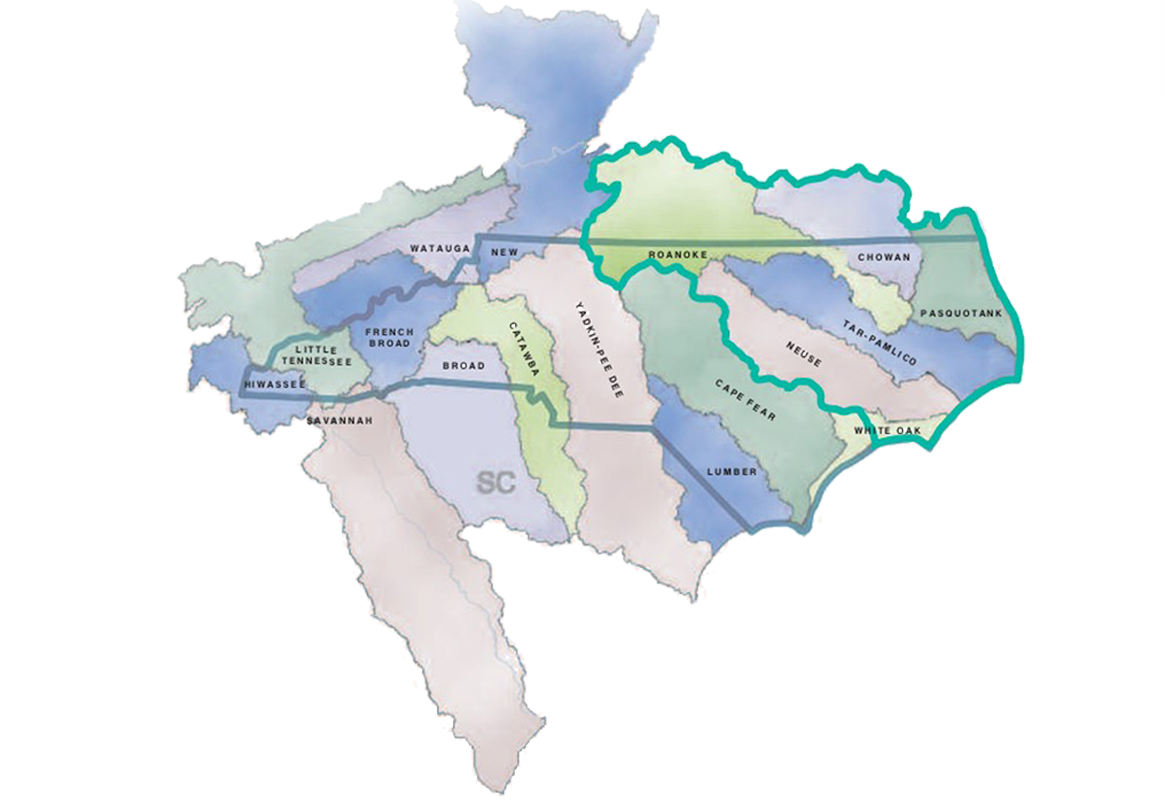
The watershed of the Albemarle-Pamlico estuarine system encompasses portions or all of six major river basins - the Neuse, Roanoke, Tar-Pamlico, Chowan, Pasquotank, and White Oak. Besides rivers, streams, sounds and marshes, the region includes the fields, forests, cities, and towns that surround them. All the water flowing across this landscape - rain and melted snow - eventually drains into the estuary.
Visit the N.C. Office of Environmental Education's website for additional educational materials for each of North Carolina's River Basins, including booklets, interactive StoryMaps, GIS resources, and more.
Booklets & StoryMaps
River Basins
The Chowan River Basin is a region of vast hardwood swamps and tea-colored rivers. Boasting 15,600 acres of estuary and 791 miles of streams and rivers, this basin is home to some of the best fishing in the state.
Chowan (NC) River Basin Booklet
From its blackwater streams that rank among Virginia's healthiest waterways to its ability to support robust agriculture, the Chowan River Basin hosts rich ecological and human diversity.
From the Falls Lake Reservoir Dam in Wake County to its mouth in the Pamlico Sound, the Neuse River spans 248 miles, making it the longest river in North Carolina. As the fourth largest basin in the state by area, the Neuse has an area of 6,062 square miles, covering all or part of 18 counties in North Carolina.
The Pasquotank River Basin is made up of 41% water. It also has the more national wildlife refuges and less people than any other river basin in North Carolina.
The Roanoke River Basin is known for providing; from its fertile soils to abundant fish, it has been a crucial part of life in North Carolina and Virginia.
This 180-mile river begins as the Tar with its freshwaters flowing through the Piedmont and ends with the brackish waters of the Pamlico. Contained entirely within North Carolina, this river basin provides life to people, fish, and Lake Mattamuskeet's famous migratory birds.
Tar-Pamlico River Basin Booklet
Nestled between the Neuse and Cape Fear River Basins, the White Oak River Basin is home to abundant forest and wetland habitat, covering half the basin. As such, it boasts impressive fishing with Core Sound producing the most valuable seafood catch in the basin, follow by Bogue Sound.